馬頭星雲と燃える木星雲The Horsehead and Flame Nebulae
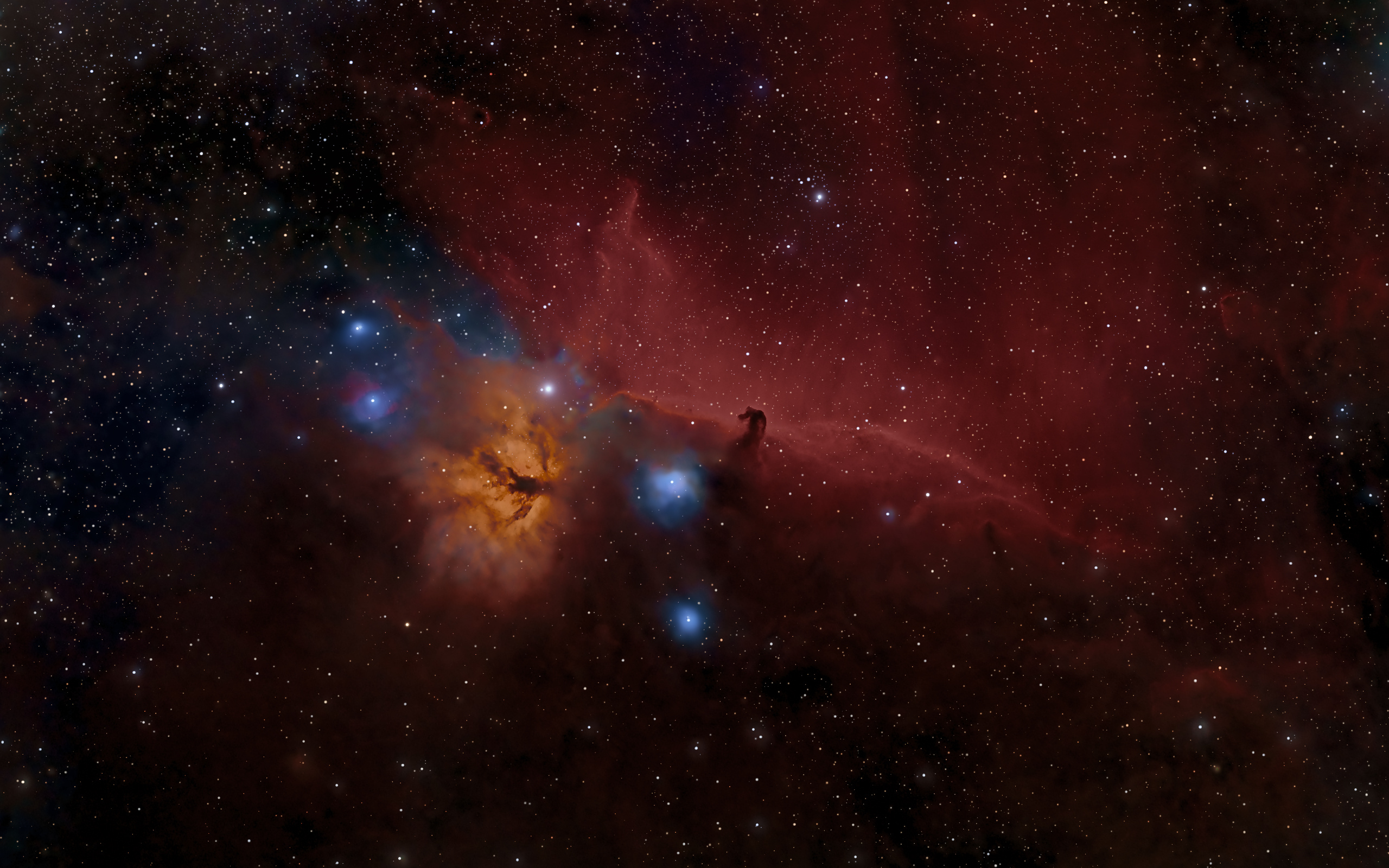
撮影・画像処理・著作権:Stefano Ivan Stinga(リモート望遠鏡:タカハシ FSQ-106ED、ナミビア)Image & Copyright: Stefano Ivan Stinga (remote telescope: Takahashi FSQ-106ED, Namibia)
ダウンロードDownloads
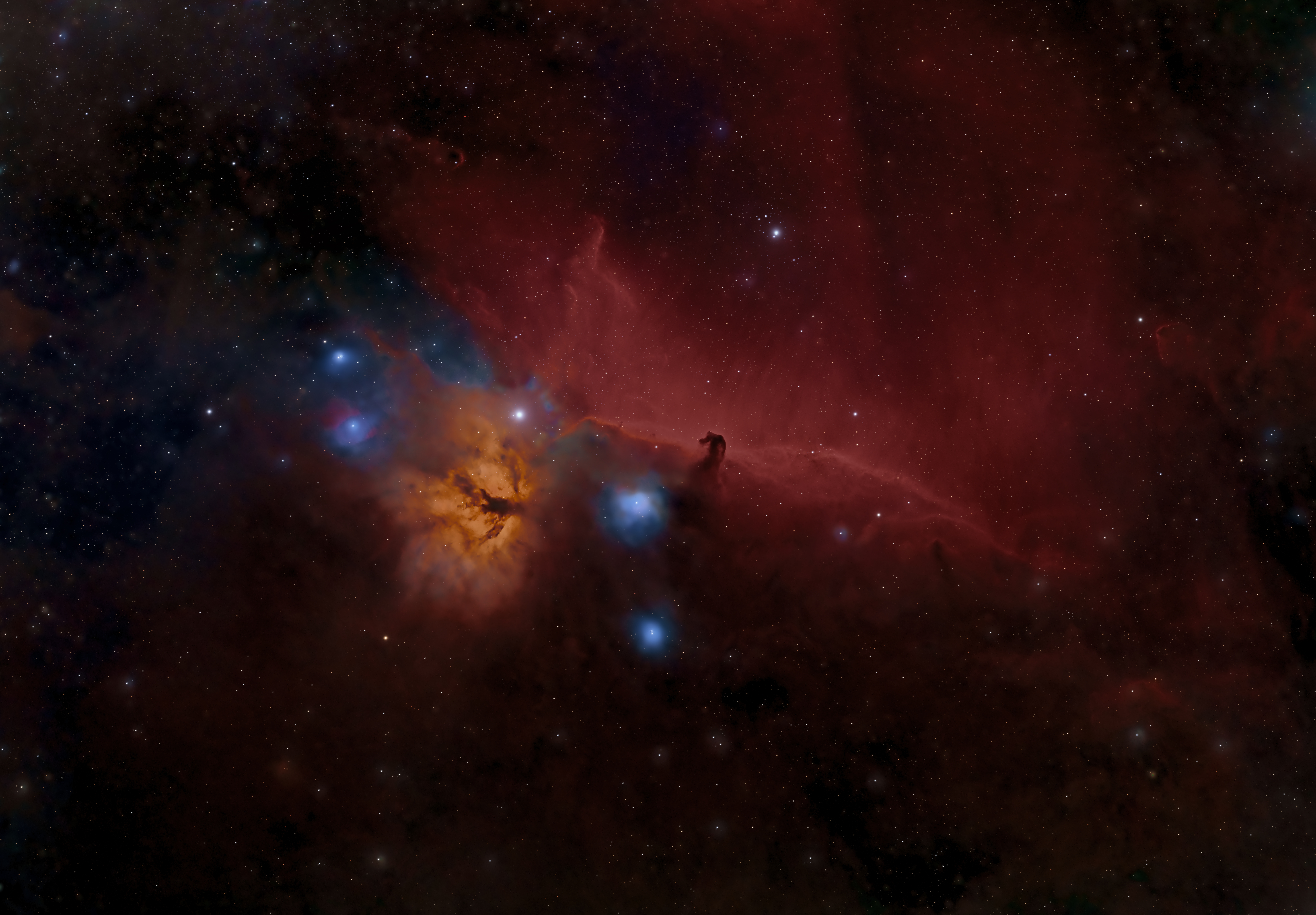
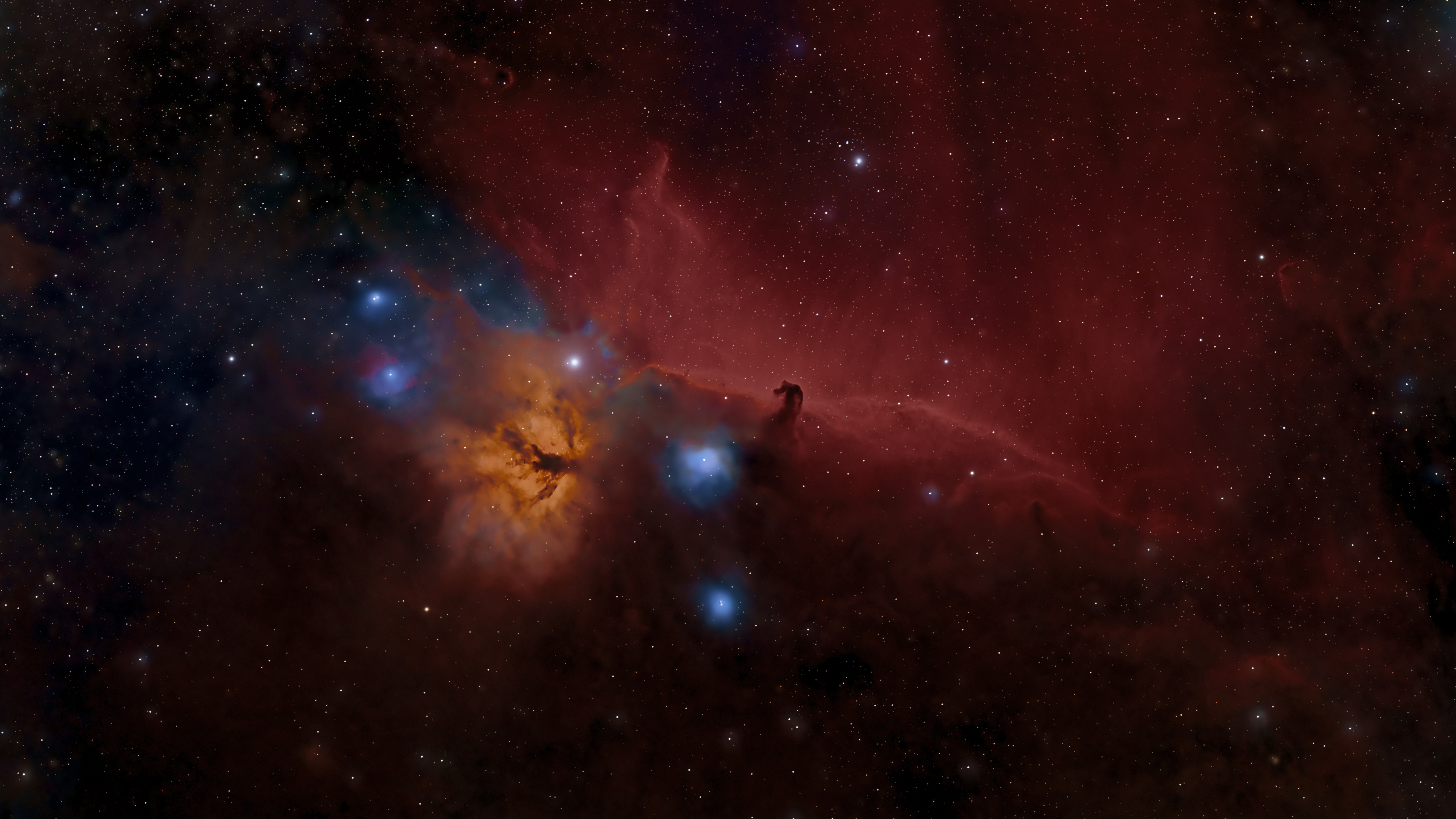
16ビットTIFFは、ご要望に応じてお送りします。(X @Sting1_JP)A 16-bit TIFF is available on request: X @Sting1_JP
拡大画像Close-ups
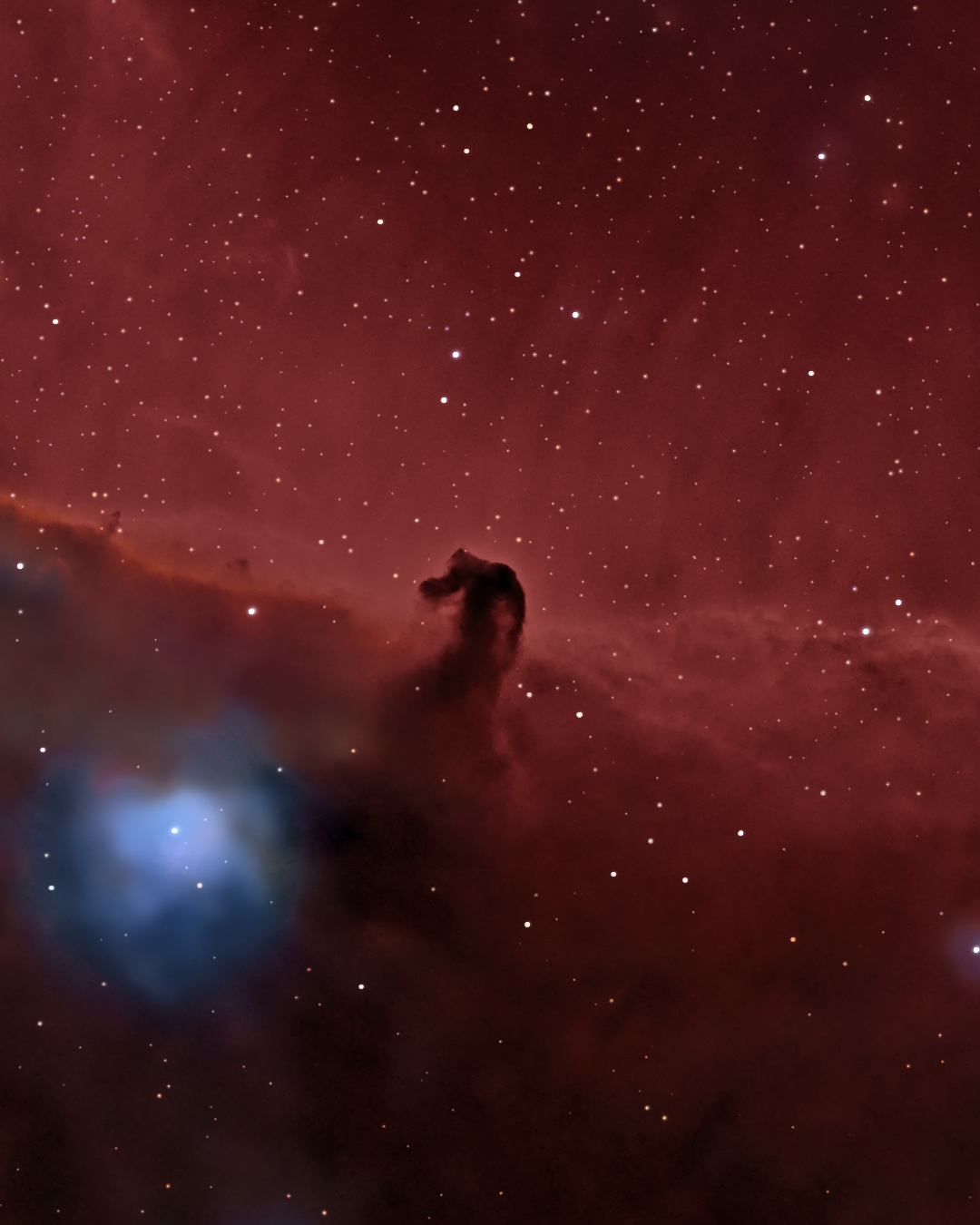
馬頭星雲(バーナード33)と、IC 434の明るい縁The Horsehead (Barnard 33) and the bright edge of IC 434
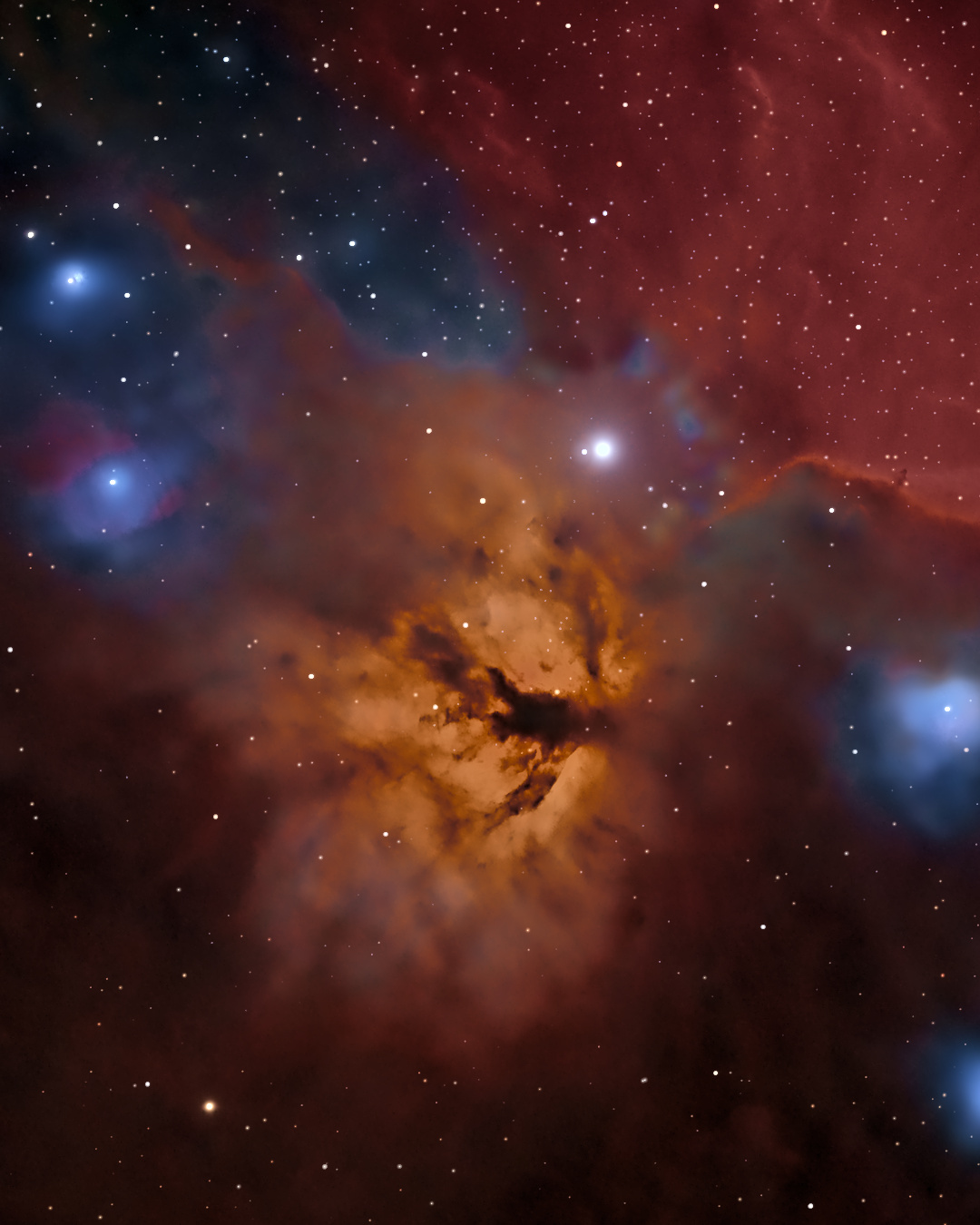
燃える木星雲(NGC 2024)と、オリオン座の三つ星の一つアルニタクThe Flame Nebula (NGC 2024) and Alnitak, a star of Orion's Belt
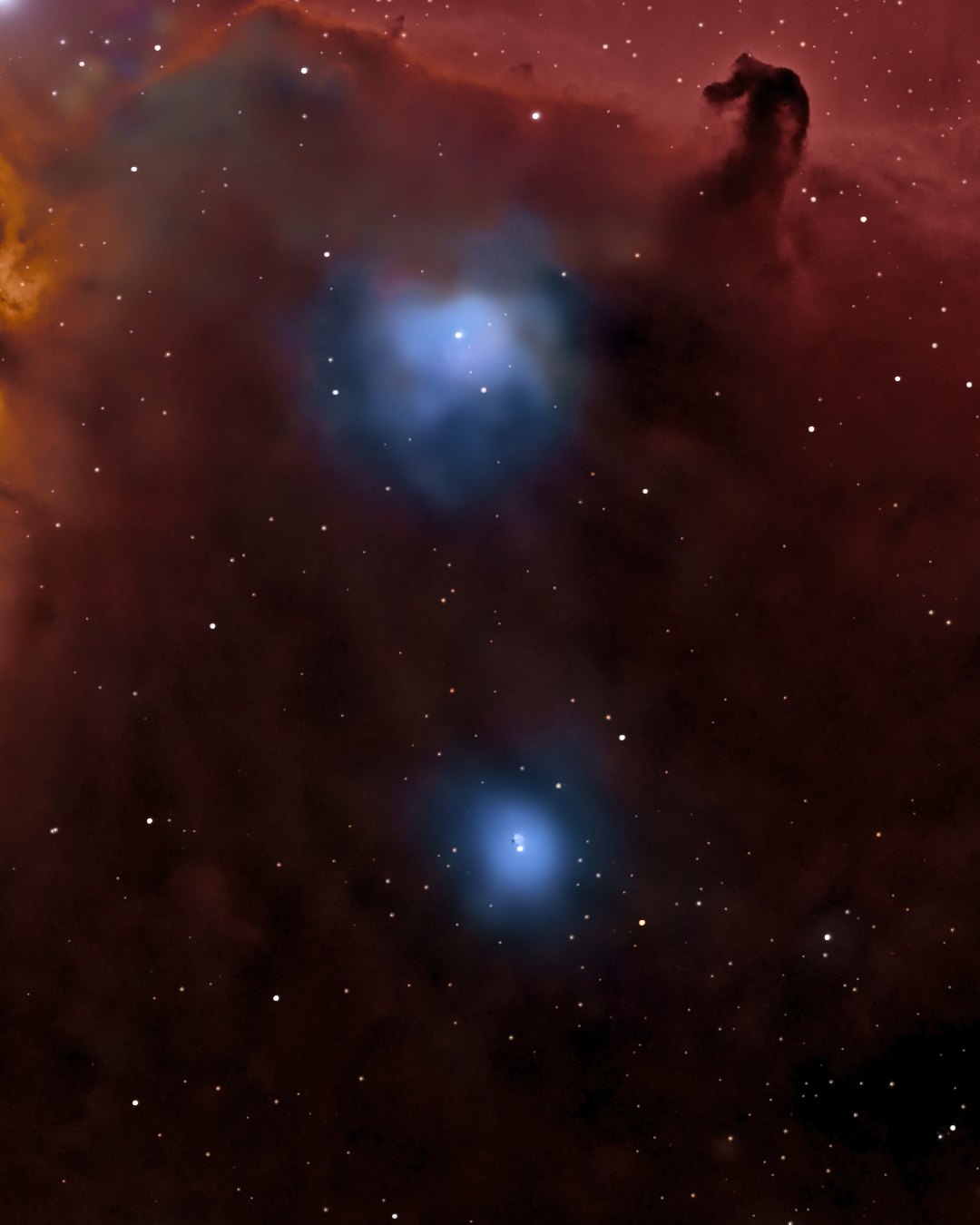
青い反射星雲NGC 2023とIC 435(右上に馬頭星雲)The blue reflection nebulae NGC 2023 and IC 435, with the Horsehead at the top right
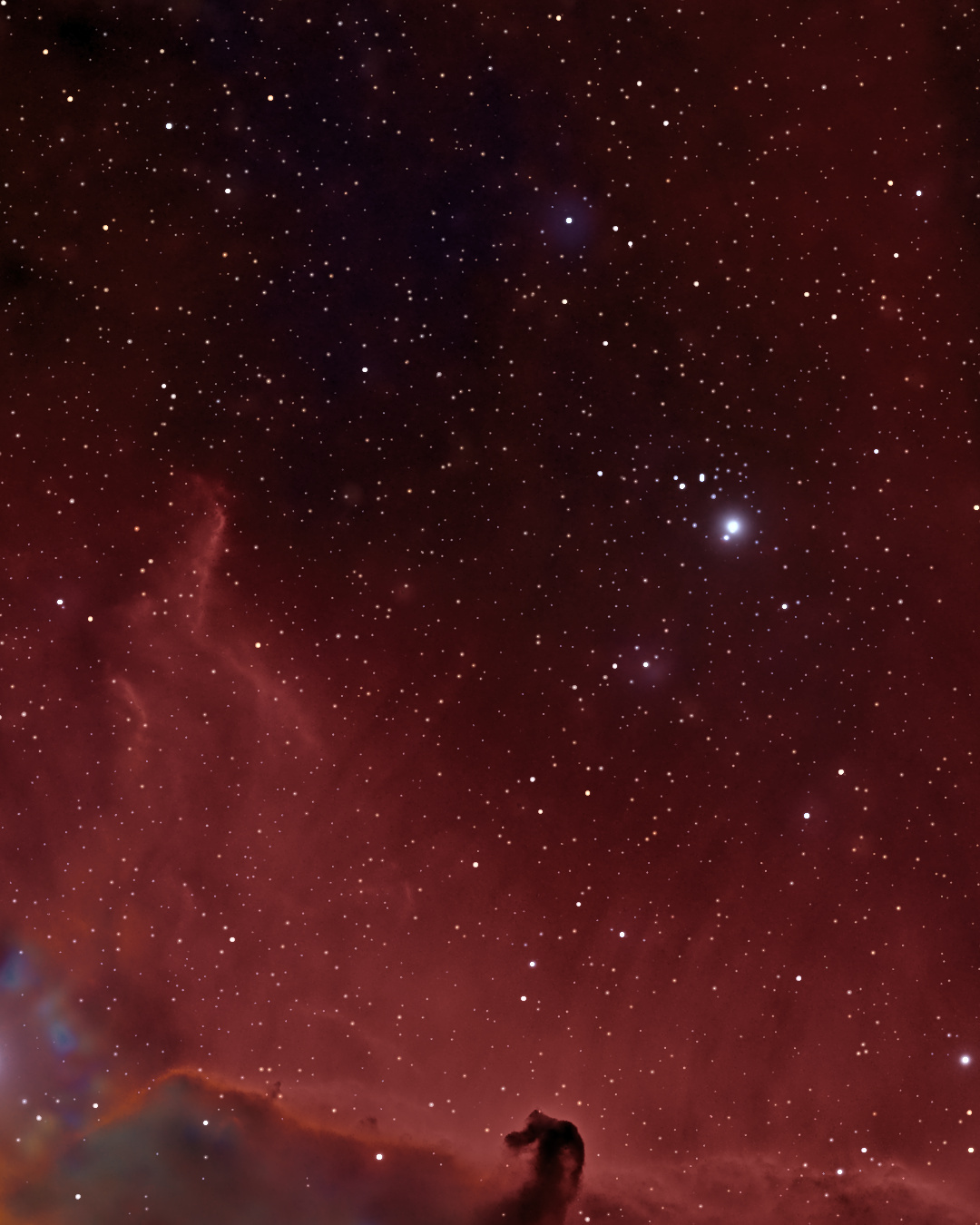
IC 434を光らせる星、オリオン座σ星(右)と、下に馬頭星雲Sigma Orionis (right), the star that makes IC 434 glow, with the Horsehead below
拡大画像は、より広い範囲を1/2または2/3の大きさにしたもので(星はそのサイズで描画)、局所的なコントラストを少し上げています。フル解像度の切り抜きは、上のフル解像度版からどうぞ。Close-ups show larger areas at 1/2 or 2/3 size (stars drawn at that size), with local contrast raised slightly. For full-resolution crops, use the full-resolution file above.
解説
オリオン座の三つ星の東の端、アルニタクの近くにある暗黒星雲「馬頭星雲」(バーナード33)です。距離は約1,400光年。冷たいちりとガスの雲が、背後で赤く光る水素ガスの雲IC 434に、馬の頭の形のシルエットとして浮かび上がっています。IC 434を光らせているのは、近くの高温の星オリオン座σ星です。左には燃える木星雲(NGC 2024)が金色に輝き、そのそばにアルニタクがあります。馬頭星雲の下の青い雲NGC 2023とIC 435は、近くの星の光をちりが反射している反射星雲です。写野は3.5×2.4度(満月約7個分の幅)で、北は左です。私の最初期の天体写真の試みの一つを、新しく処理し直しました。
作り方
- 2026年1月18日と22日(世界時)、ナミビアにあるリモート望遠鏡(タカハシ FSQ-106ED 屈折望遠鏡、焦点距離530 mm、Moravian C3-61000 PRO カメラ)で撮影。観測時間はSkyGemsから借りたものです
- 水素Hα 3分×25枚、赤・緑・青 1分×10・10・15枚(計1時間50分)。明るい星の芯には10秒露出(Hα 29枚、赤 30枚)
- ダーク・フラットなしで、自作のPythonツールで位置合わせ・合成。ホット/コールドピクセル、周辺減光、空のむら、縞状のノイズは画像そのものから測って補正
- 色はESAのGaia DR3カタログの1,656個の星で校正(太陽に似た星が白になるように)
- Hα線を連続光から分け、星雲で測った割合で赤・緑・青に加えて1.5倍に強調。IC 434では赤を深めに表示(自然な色はピンクがかった赤)し、燃える木星雲と反射星雲はそれぞれ自身の色を保っています
- 18日の赤・緑・青の画像はピントがずれていたため、色はなめらかな層として使い、細部はHαから
- 星と星雲を分けて処理。星の形はHαと10秒の赤の画像から取り、測った幅の約3/4までデコンボリューション(ぼけの補正)。星の色はそれぞれの星の赤・緑・青の光から。Hαはノイズを低減し、信号の強い部分をデコンボリューション
- 仕上げの色:いちばん暗い部分は真っ黒にせず暗い暖色の茶色に、水素の光は深い赤、燃える木星雲は琥珀色、反射星雲は青に。彩度は控えめにしています
- 星は画像のサイズごとに描画(フル解像度、Web版、5K、拡大画像)
注記
- 肉眼で見える色そのものではありません。水素の光を強調し、IC 434の赤を深めています。
- 星のまわりに残った光の輪や、写野のすぐ外にある三つ星の中央の星アルニラムのまぶしい光は、測って差し引いています。
- Web版・5K・拡大画像は、同じ処理からそれぞれのサイズで作っています(星はそのサイズで描画)。拡大画像は局所的なコントラストを少し上げています。
- ほかに描き加え・削除・複製・AIによる生成はしていません。測光用ではなく、鑑賞用の画像です。
About this image
The Horsehead Nebula (Barnard 33) is a dark cloud near Alnitak, the eastern star of Orion's Belt, about 1,400 light-years away. Its cold dust and gas stand out as the silhouette of a horse's head against IC 434, a glowing cloud of hydrogen lit by the hot nearby star Sigma Orionis. To the left, the Flame Nebula (NGC 2024) glows gold beside Alnitak. The blue clouds below the Horsehead, NGC 2023 and IC 435, are reflection nebulae: dust reflecting the light of nearby stars. The field is 3.5 × 2.4 degrees, about seven full Moons wide, with north to the left. This is a reprocess of one of my first astrophotography experiments.
How it was made
- Taken remotely on 18 and 22 January 2026 (UT) with a Takahashi FSQ-106ED refractor in Namibia (530 mm focal length, Moravian C3-61000 PRO camera), on observing time rented from SkyGems
- Hydrogen-alpha 25 × 3 min; red, green and blue 10, 10 and 15 × 1 min (1 h 50 min in all); 10-second frames (29 hydrogen-alpha, 30 red) for the cores of bright stars
- Aligned and stacked with my own Python tools, without darks or flats: hot and cold pixels, vignetting, sky gradients and banding measured from the frames themselves
- Colour calibrated on 1,656 stars of ESA's Gaia DR3 catalogue (sun-like stars are white)
- The hydrogen-alpha line separated from its continuum, added to red, green and blue in the proportions measured on the nebula, and boosted 1.5×. In IC 434 its red is deepened (the natural colour is a pinkish red); the Flame and the reflection nebulae keep their own colour
- The red, green and blue frames of 18 January were out of focus, so they give only the smooth colour; the fine detail comes from the hydrogen-alpha
- Stars processed separately from the nebula: their shapes come from the hydrogen-alpha and 10-second red frames, sharpened by deconvolution to about 3/4 of their measured width, and each star's colour is its own red, green and blue light. The nebula: noise reduction, then deconvolution where the signal is strong
- Final colour: the darkest parts lifted to a dark warm brown instead of black, the hydrogen glow deep red, the Flame amber, the reflection nebulae blue, with restrained saturation
- Stars drawn separately for each picture size (full, web, 5K, close-ups)
Notes
- These are not exactly the colours the eye would see: the hydrogen glow is boosted and the red of IC 434 deepened.
- Leftover glows and rings around stars, and the glare of Alnilam, the middle star of Orion's Belt, just outside the frame, were measured and subtracted.
- The web, 5K and close-up versions are made from the same processing at their own sizes, with the stars drawn at that size; the close-ups have slightly more local contrast.
- Apart from this, nothing was added, removed, cloned or generated with AI. For illustration, not photometry.
利用についてUse
報道・記事でのご利用は、上記のクレジットを表記いただければご自由にどうぞ。それ以外のご利用はご連絡ください(All rights reserved)。News and editorial use is welcome with the credit above. For any other use, please get in touch (all rights reserved).
X: @Sting1_JP · Flickr: photostream